
You cannot calibrate a barefoot
A fable about rivers, tools, human judgment, and the way of seeing that comes up through the soles of our own feet.

Once there was a little town located on the banks of a very unpredictable river that could not hold still.
Legend had it that the river drowned the mayor’s father. Naturally, no one in the town liked that river much. But it had been the only way to the markets on the far side and the town could not do without it.
For two hundred years there had been a ford: a shallow place where a person could wade across with a cart and come out wet only to the knee. Children learned the ford before they learned the alphabet. Everyone knew exactly where it was. Their fathers used to cross it there, as well as their fathers’ fathers, and the old ones spoke of it with the boredom people reserve for miracles that have passed down through generations.
Then, one spring, the river quietly shifted.
The bank gave way somewhere upstream. The water leaned to one side during the night. By morning the deep channel sat precisely where the safe crossing used to be. People who stepped in where their grandfathers had stepped did not come out where their grandfathers had come out. One man lost his cart. Another had lost his mule. And ever since then, nobody would wade into the water without worrying about their belongings, and sometimes even their own lives.
The town held an emergency meeting and decided to build a bridge.
It was a lovely bridge. Built of stone, high-backed, costly, and admired by everyone who did not have to pay for it. They built it exactly where the ford had always been, because that was where the crossing was, and had been, so they reasoned, must continue to be.
For a year or two, the bridge was the pride of the valley.
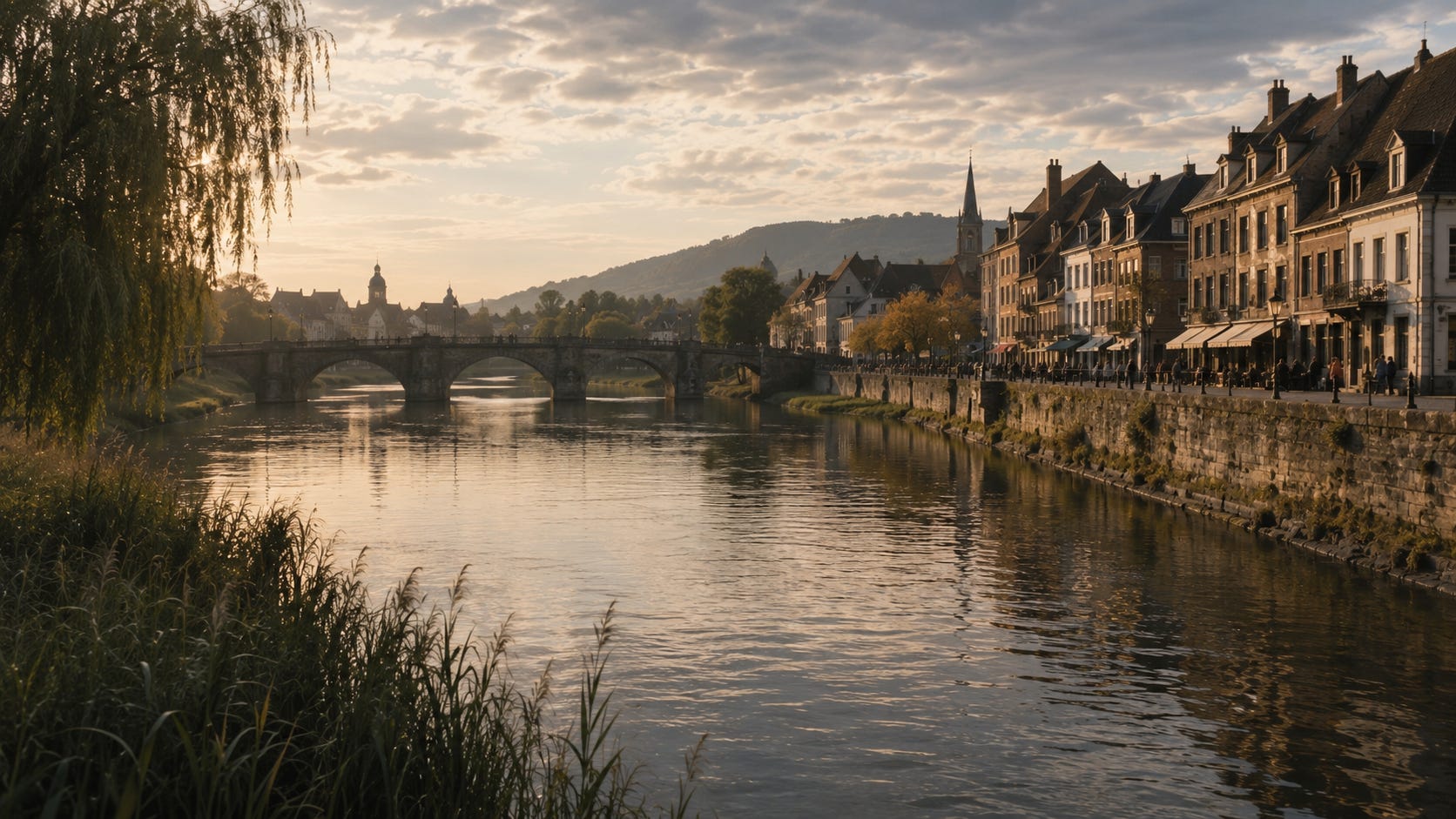
Then, as it happens with some rivers and most certainties, the river moved again.
It left the bridge standing over the stretch of dry white rocks, while the water flowed fast and muddy a hundred paces to the east. The townspeople stood on the bridge they had built together and looked down at the rocks beneath it.
“Perhaps the river will return,” someone said.
Gloria, who was standing at the back of the crowd, said: “It’s a very fine bridge. You should introduce it the river someday.”
Nobody replied, partly because nobody quite knew whether she had insulted the bridge, the river, or the town. Gloria often left people with that choice.
She knew the river better than anyone. And she knew people about as well as she cared to, which was not very. She crossed the river barefoot all seasons through, because, she said, you cannot feel the ground through a boot, and the truth of a river reaches the soles of your feet before it reaches your eyes.
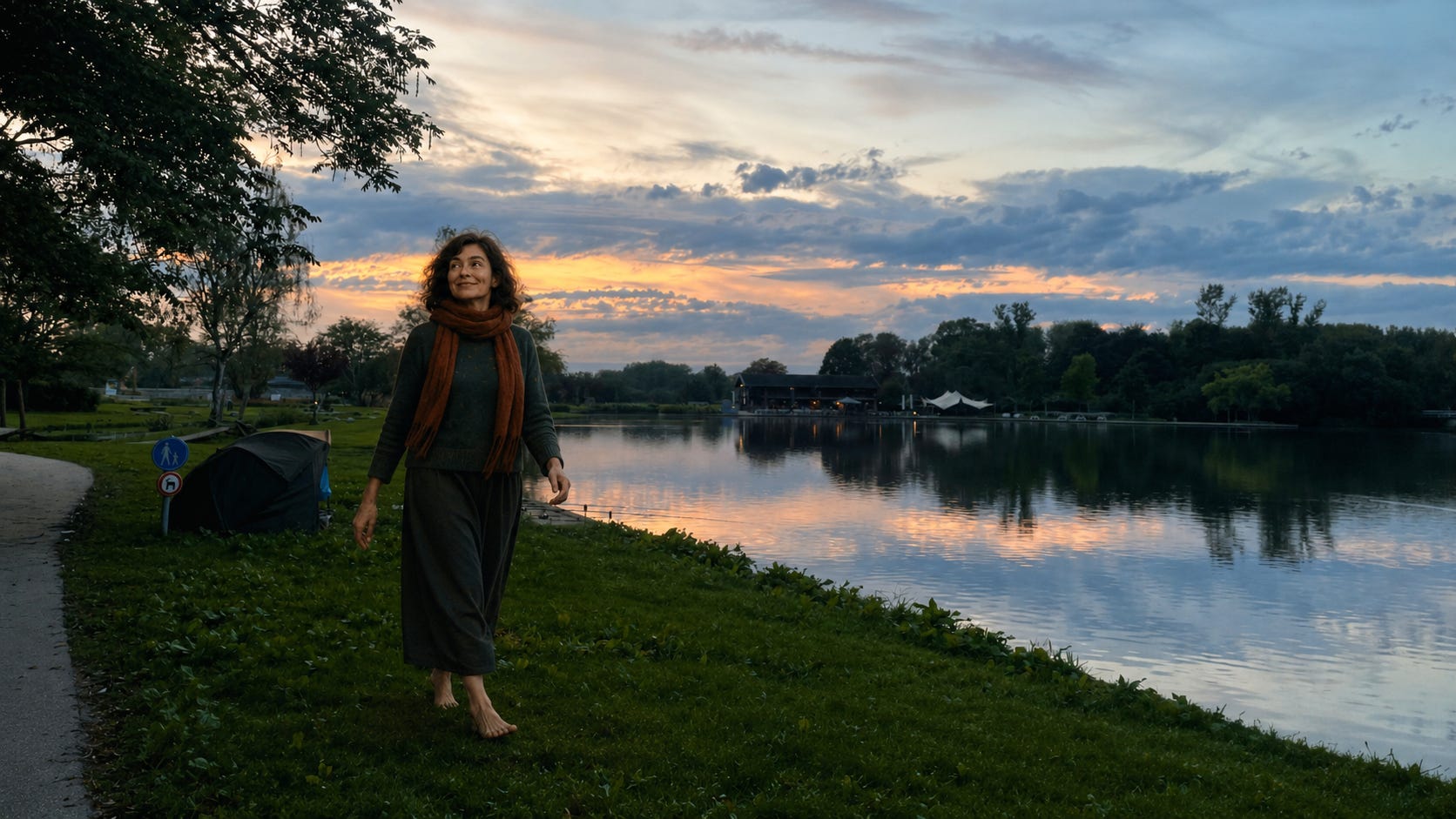
So the mayor, having run out of better idas, turned to Gloria for help how to cross.
She would not give them a map.
“A map tells you where the river was…I can only tell you where it is,” she said.
Every grey morning she went down to the bank and stood with her feet in the cold water. Then she would tell them: here today, not there; wait an hour; send the empty cart first; no crossing before noon; no crossing at all.
She was right almost every day.
The town crossed, and lived, and complained about the old woman’s blessing necessary to go to the market.
A boy named Charlie came to her to learn.
Charlie wanted the list. He wanted the signs, the rules, the seven things to check. He wanted something he could put in his pocket and carry like a charm against uncertainty.
“Just tell me how you know,” he said.
Gloria stared at him for a long time.
“I don’t learn everything immediately,” she said. “I notice until I learn.”
That irriated Charlie, who liked knowledge to be neatly labelled.
So Gloria taught him poorly at first, or so he thought. She taught him to watch the reeds and not the shine. To pay attention to the distant bank before looking at his own feet. She taught him the difference between water that rushed and water that hunted. She taught him the sounds the stones make beneath a slight stream and the sound they make when the rain from the hills was an hour away.
“Is that a rule?” Charlie asked.
“No,” said Gloria.
“Then what is it?”
“Something to remember until it changes.”
It took him years. Gloria was not in hurry. Nor did the river hurry, and Gloria had no reason to be more merciful than water.
Sometimes Charlie was sure he understood everything, and Gloria would send him to the bank on his own. He would come back proud, announcing the crossing safe. She would ask him what the reeds had done in the wind. He would not know. She would ask whether the brown in the water was clay or peat. He would not know. She would ask why the birds had moved to the upper stones. He would not know that either.
“Again tomorrow,” she said.
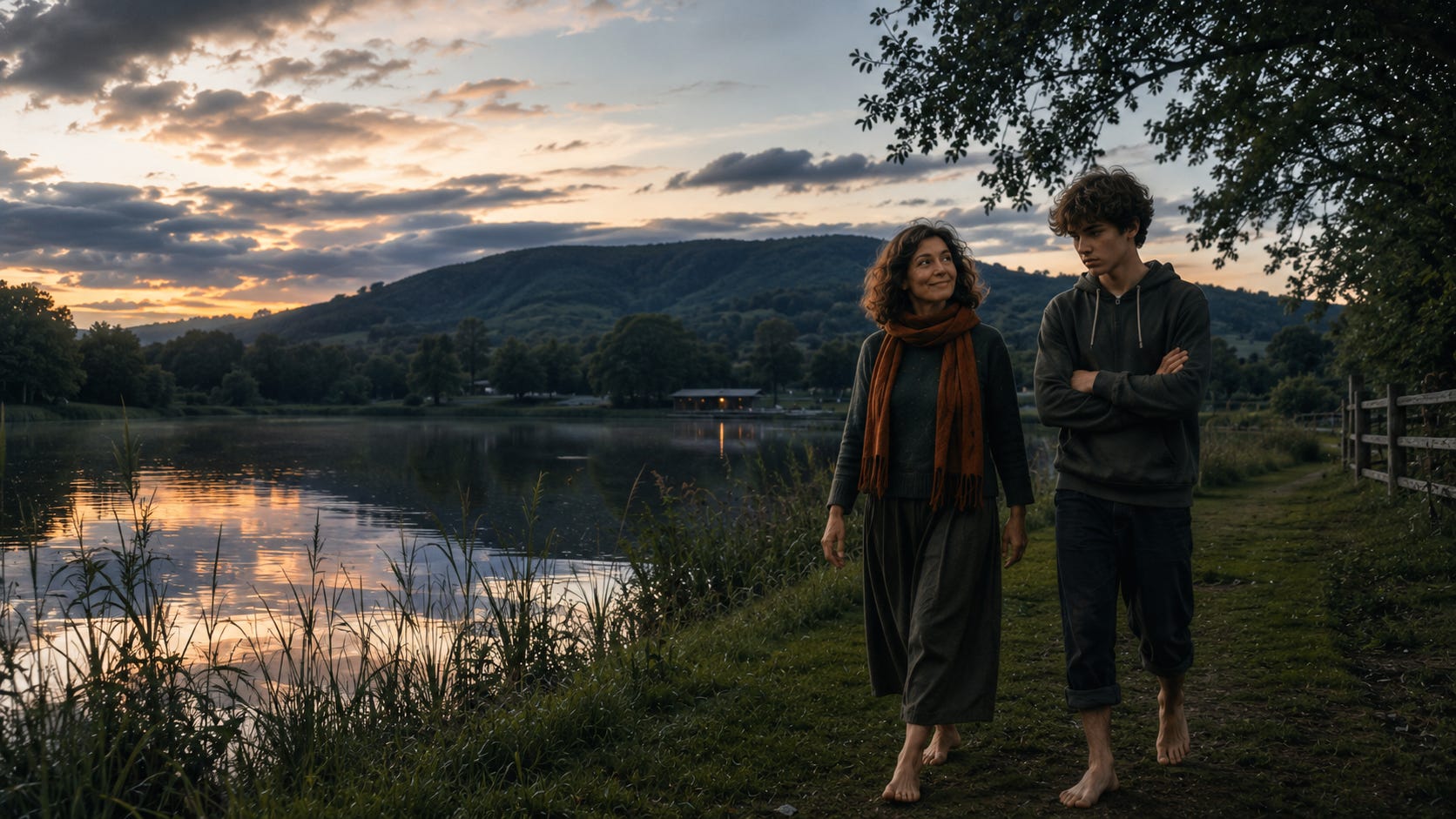
One day, after he had been wrong in new ways, Charlie chucked a stick into the river and said, “There must be a simpler way.”
“There is,” said Gloria. “Try to guess it.”
He did not laugh. He was young enough to confuse simplicity with mercy.
One day, a well-spoken man arrived from the city with a shiny box, a notebook, and a device clever enough to make the town feel modern.
He was not a fool. That made him more dangerous to fools.
He studied the crossing. He watched Gloria work. He set a post in the water, marked it with careful lines, and attached a bell to a float so that every time the water went below the safe level, the bell rang clear across the bank.
“There,” he said. “Now anyone can know when to cross.”
The town was delighted.
The machine did not grumble. It did not grow old. It did not talk in poetic language at the town’s meetings. It did not ask whether anyone had noticed the reeds. It gave the same answer to everyone, all the hours of the day, with the clean bright confidence of something that had never been afraid.
For a few weeks, the city man checked the bell against Gloria’s readings. On most days, they agreed.
“You see?” he said. “We calibrated it.”
“You have calibrated a bell,” Gloria corrected him. “You cannot calibrate a barefoot.”
He smiled politely, as people usually do when they think a sentence is poetry and therefore not evidence.
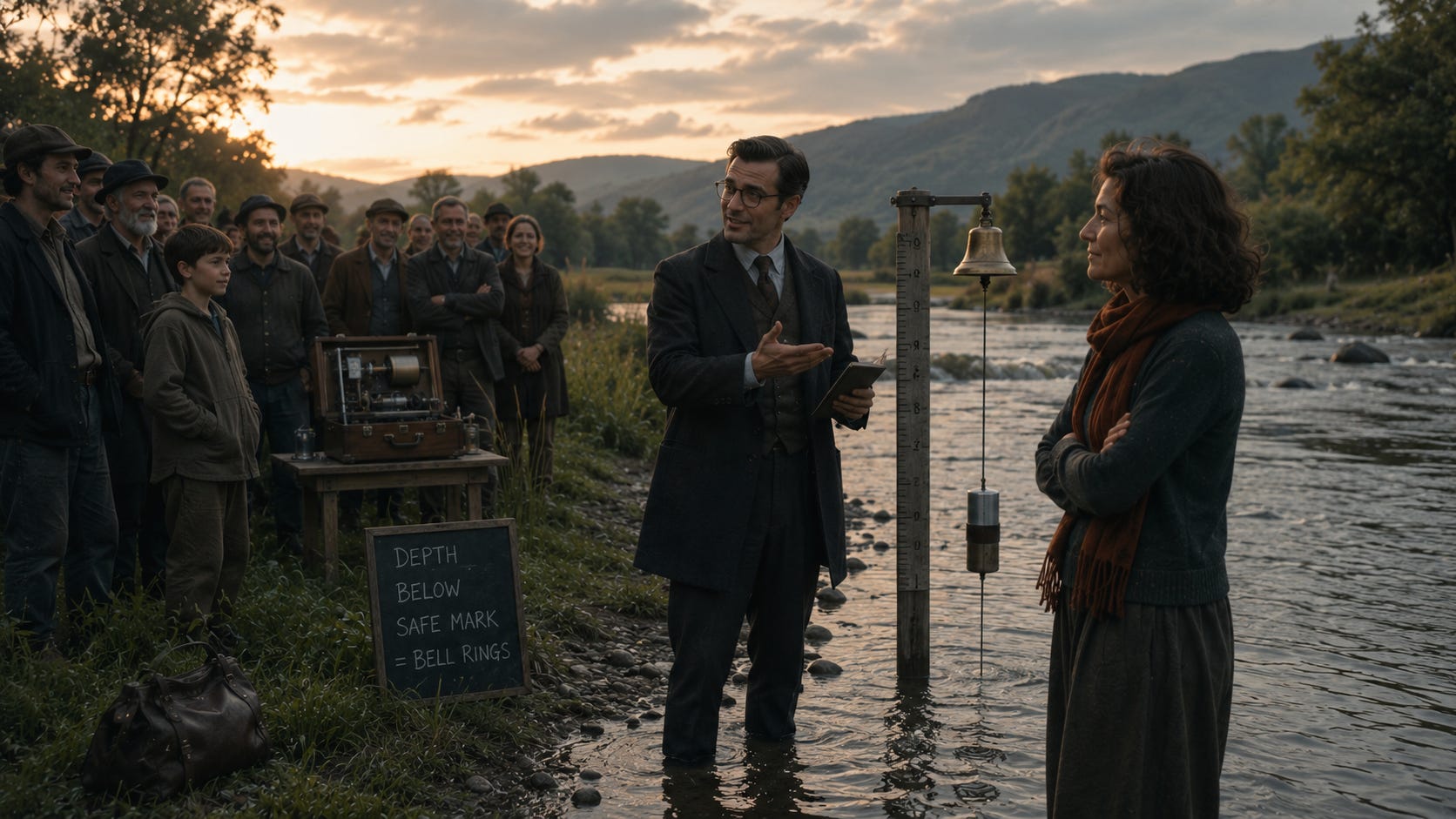
The town came to congratulate Gloria. Now she was free, they said. The bell would do it all.
“Free,” Gloria sighted. “People keep telling me that. I never seem able to spend it.”
But she did not protest. For a while, she stayed up the bank and let the bell ring. The town crossed by the number, and everybody was content.
At first, it was nice not to be needed anymore.
Gloria could wake up late and her feet stayed warm. Nobody appeared at her door at dawn wondering whether a donkey could cross the market road by noon. Nobody cursed her when she said no. Nobody praised her as wise, which was almost as tiresome.
The bell rang. The town crossed. The world moved on.
Still, she found herself listening for the river from her bed.
Not because the bell was useless. No, the bell was not useless. It measured depth, and measuring depth was a tedious work.
But the bell knew nothing else but the question it had been build to answer.
How deep?
It did not know to ask what happened in the hills. It did not know the smell of the bank beginning to loosen. It did not know the difference between a low river resting and a low river gathering itself. It did not know that a crossing can be shallow and still want to drag you under.
Then came the morning of the wedding.
The bell rang low and clear and safe.
The wedding party came down the road in their good shoes, laughting louder than usual since weddings make people brave in groups. The bride kept her hem above the mud. The groom carried a bottle. Some fool tied ribbons to the cart horse’s mane, and the horse, having more sense than the people, did not like the look of the water.
Charlie was a grown man by then. A tall and silent man who was still carrying a little boy who had needed order and rules and found disappointment in reality.
He stood in front of the wedding party and would not let them pass.
The mayor’s wife told him not to be ridiculous. The groom told him the bell had rung. The bride said they would be late. Someone asked if Gloria had sent him.
“No,” Charlie replied.
This made everyone angrier.
The level of water was low. The bell was not wrong about that. The river sat obediently below the mark.
But Charlie had heard rain falling in the hills two nights before, rain which had not reached the town yet. Charlie had watched the reeds bowed in the morning wind. He felt a cold pull of water beneath its brown surface. It was not deep, not loud, and it moved sideways through the crossing like a thought no one had confessed.
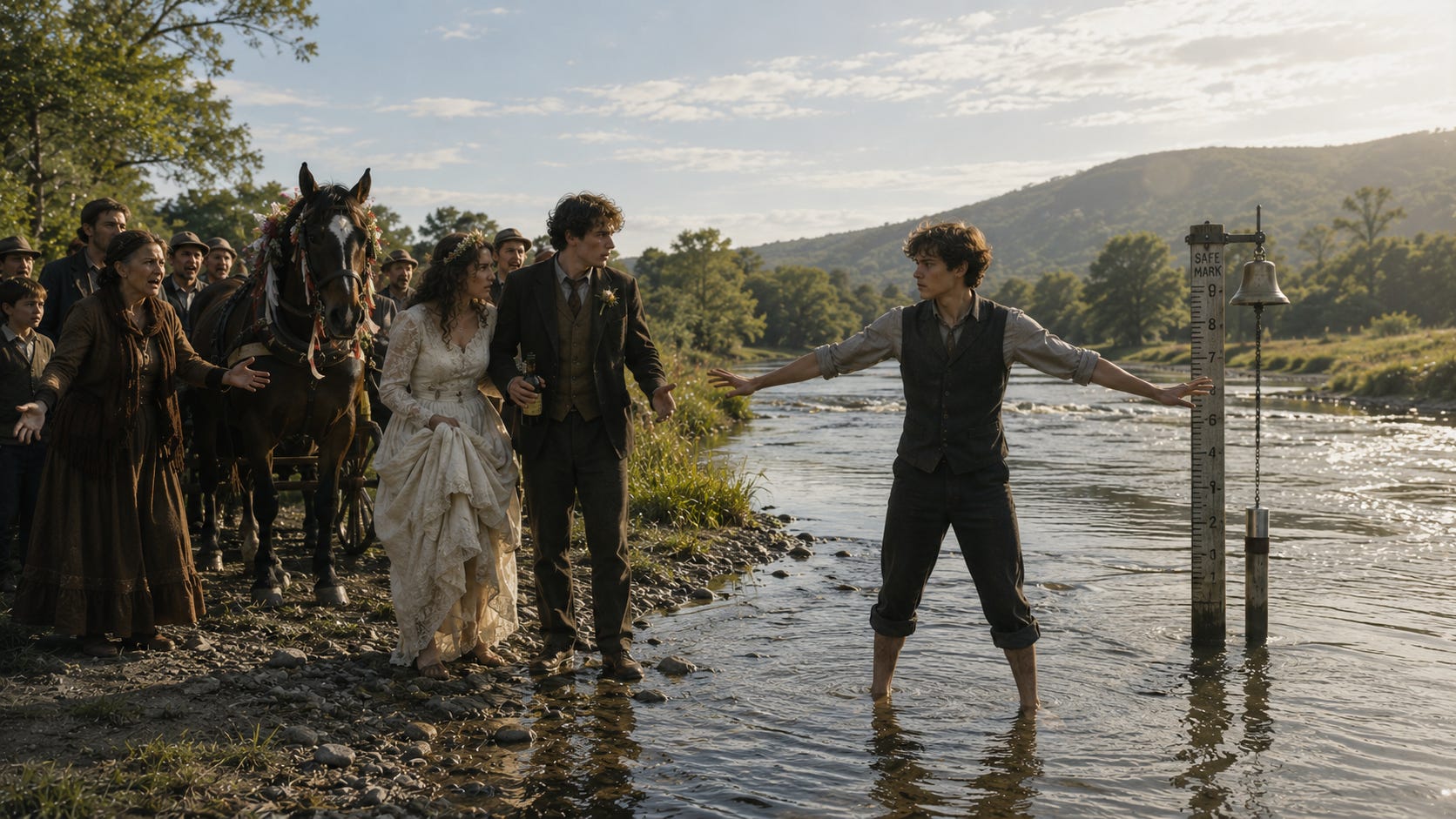
“Nobody crosses,” Charlie said.
The wedding party waited on the shore, furious and shining and slowly loosing the bottoms of their shoes to mud.
By noon, water became quieter and rose without any movement. The crossing changed. A brown shoulder of the current began to push across the shingle and dragged an empty cart out of it precisely in the spot where the wedding party would have stepped.
The bell was still ringing safe.
At the post, it was correct. But when someone had to decide to cross or not, being correct was not always the same as safety.
No one said very much after that. People rarely apologise well when the apology is owed to someone who has saved their life in an inconvienient way.
Gloria watched from the bank above.
She saw the cart pass by. She saw Charlie standing in the shallows with his bare feet, soaking wet trousers till the knees, one hand out as if holding back not the wedding party, but the town’s old hunger for certainty.
And she saw what she had nearly allowed.
The town had not replaced her with a machine. That would have been simple. The town had replaced one question with another and called the answer complete.
The bell could tell them how deep the water was. That was useful. That was a good information to have. Let the bell have the number of depth. But the whole depth of the river could never be put down to only the number.
It could not teach anyone when to doubt a fine morning. It could not notice what no one had taught it to notice. It could not stand beside a stubborn boy in the cold until he let go of the need for rules and started paying attention.
And there was Charlie, doing what the bell could not do, on a morning Gloria had not even come down.
“The bell tells you how deep,” Gloria said, to no one in particular. “It cannot tell you when the river is in a temper. Most people can’t either, even after years of practice.”
She came back to the river the next day.
Not because the post needed her. Not because the town asked for her presence. Not because the bell had failed, exactly. Failure was too grand a word for a tool that had done precisely what it was made to do.
She came back because the river asked for all of her attention again, and she had missed being asked.
After that, the town kept the bell.
They would have been foolish not to. It rang on ordinary mornings and saved everyone from asking Gloria whether wet stones were wet. It served its purpose well enough.
But the town also kept Gloria, and Charlie after her, for everything that had not yet been written on the post.
On those mornings when crossing the river was not necessary, Gloria still made the trip down to the bank. She read the river for no one and nothing, only because it was hers to read. She wanted her feet to have experience of the common days, so that they would not be strangers to the dangerous days.
Charlie came with her less because she asked than because he had learned what asking was.
He no longer said, “What are the rules?”
Instead he said, “What happened during the night?”
Gloria liked that question better.
Time passed and the bridge turned silver. The post started leaning. The bell turned rusty and had to be rapaired twice. The children grew up knowing three ways to cross: the old ford their grandparents remembered, the impressive stone bridge for tourists, and the dynamic crossing, which moved whenever the river chose.
Gloria grew smaller, as old women do when the world starts reclaiming the height that was given to them. But her feet remained capable of understansing the language of the river. Even when Charlie had to offer her his arm on the bank, she could stand in the shallows and feel the water speaking through bone.
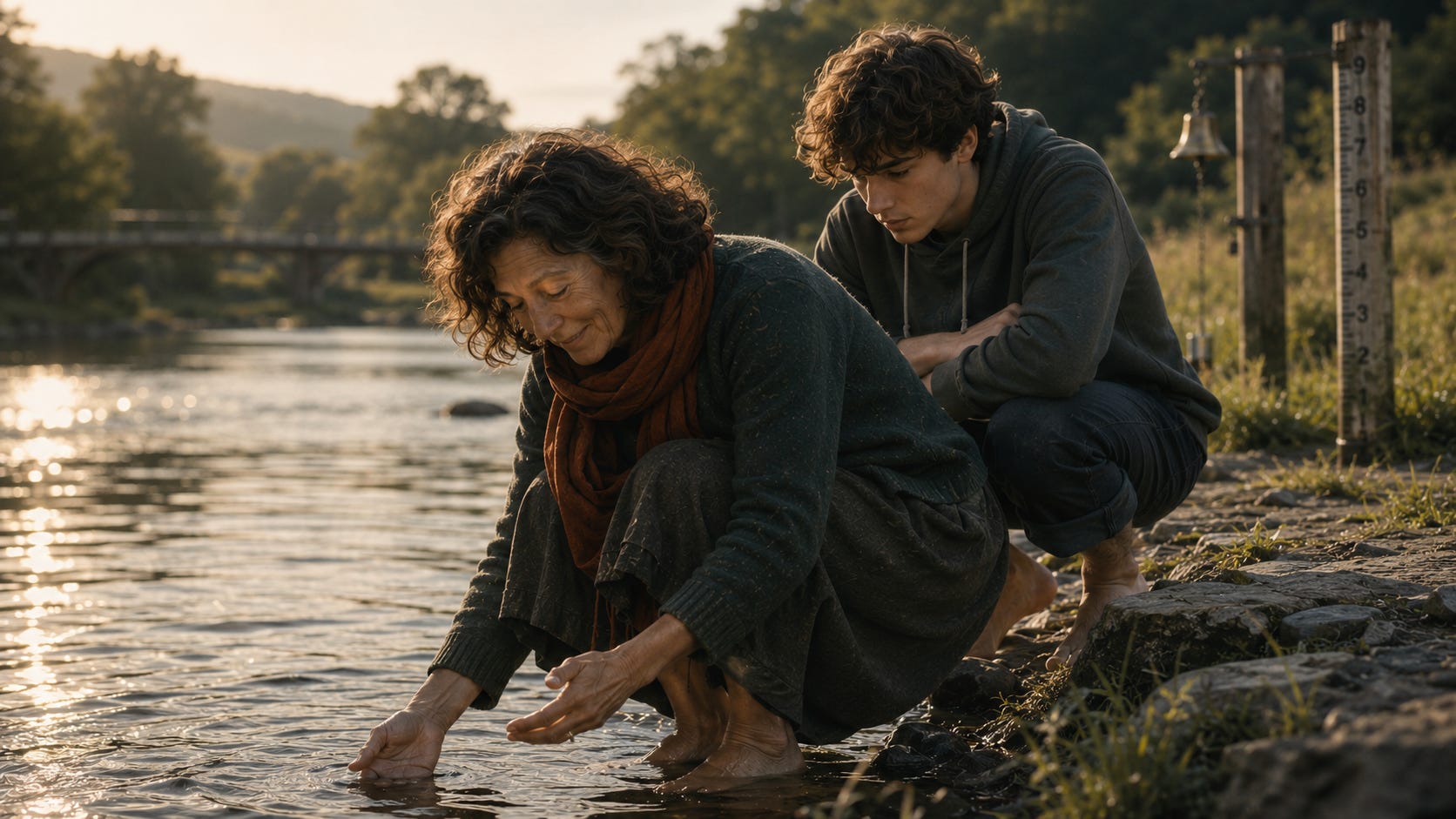
She was aware she would not always be around. She knew that better than the town did.
Yet she had not spent her life trying to learn the river’s ways.
Rather, she had spent it teaching a little boy to read one.
And a person who can understand the river will remain standing on the shore, barefoot in the grey morning, long after the woman who taught him is gone, and long after the cleverest tool has rung its last confident, mistaken bell.
For a map will only tell you where the river has been.
A bell will only tell you what it was taught to listen to.
Someone, always, has to read the river, as uncertain as it is.
Gloria's barefoot test
A bell can tell you the number. It cannot tell you when to doubt a fine morning. Build the bell. Then keep someone who reads the river.